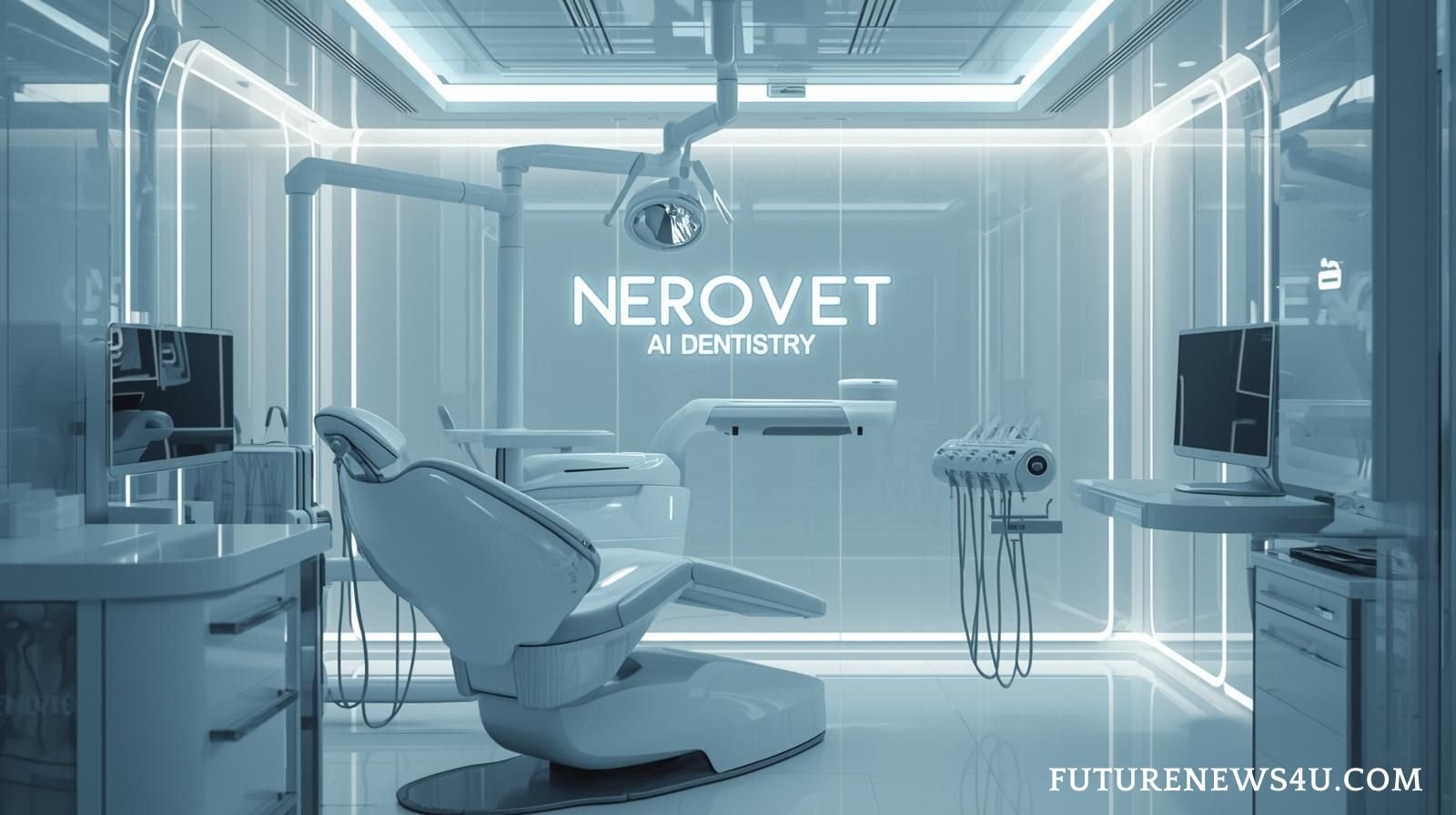
Nerovet AI Dentistry: A deep implantation in the future of dental care
Nerovet AI Dentistry will change the nature of dental care delivery. It is an artificial intelligence-based system that supports dentists in the field of diagnostics, treatment planning, communication with patients, and the optimal use of the workflow. Such solution is meant to speed up dental care, improve its precision, and provide a more individual approach.
What is Nerovet AI Dentistry?
Nerovet AI Dentistry is an artificial intelligence technology system that operates in the background of dental clinics. It examines medical records of patients such as Xrays, 3D scans, previous treatment records etc. It identifies problems with the help of machine learning, including cavities, gum disease, root fracture, or early cavities. It does not put the dentist out of business. Rather, it is a smart assistant, which provides tools that can help in making better decisions.
Key Features & How It Works
Image Analysis and Detection of Anomalies
Dental pictures (X-rays, panoramic scans, CBCT etc.) are uploaded by dentists. They are scanned by Nerovet AI Dentistry and suspicious areas are marked. The human dentist in turn reviews these.
Risk Scoring and Predictive Analytics
According to the patient history, oral healthcare, genetics, and imaging, Nerovet AI Dentistry has the ability to predict issues prior to serious challenges. This allows preventive care.
Individualized Treatment Arrangement
The system proposes treatment options that are dependent on patients. It takes into consideration effectiveness, cost, healing and preference of the patient. Dentists can adjust the plan.
Workflow Automation and Management Software
It also automates the everyday activities-charting, patient records, reminding, scheduling of appointments. This will liberate the dentists to allocate increased time to attend to patients.
Tools of communication with patients
The use of visual aids, up-to-date reports, overlays/annotations makes patients aware of what is going on. That will instill trust and possibly enhance treatment acceptance.
Nerovet AI Dentistry Advantages
- Early Detection:such issues as decay or gum disease are discovered earlier. This usually implies less painful and less complicated treatment.
- Minimized Mistakes:Provides a second verification to a human eye in order to prevent omissions.
- Productivity: Minimum time wastage in the diagnosis and paperwork translate to increased time in care. Faster treatment planning.
- Patient Comfort / Trust: It is clear when there are explanations and visuals to make the patient less scared or confused. Patients feel more involved.
- Savings in the Long-Term:Preventive care saves on enormous treatment expenses in the future. Wasted effort can also be minimized and throughput improved in the clinics.
Challenges & Risks
- False Positives / False Negatives:There are instances where the AI can identify something that is not serious, or it does not identify something that is serious. The human supervision is still essential.
- Data Privacy & Security: The sensitive patient data require a high level of protection. Risk of leaks or misuse.
- Cost & Access:Subscription / set up costs can be expensive to some clinics. Smaller practices may be left behind.
- Reliance on Quality of Input: Inequality causes low quality of scans or incomplete patient history to decrease accuracy. The artificial intelligence can be as good as the information it receives.
- Regulatory & Ethical Oversight: It has to be in accordance with healthcare legislations, approvals, and ethical practices. Monitoring is necessary to achieve safety and reliability.
Applications and use cases Clinical

- General Dentistry:Routine checkups are embarked with an added diagnosis of knowledge. The cracks or early decay are more likely to be observed.
- Orthodontics: Simulation of the motion of the teeth, more accurate designing of aligners or braces.
- Implantology & Oral Surgery: Design of implant placement by using 3D image, bone density and nerve route. Reduces risks.
- Cosmetic Dentistry: Utensils to assist in previewing cosmetic treatment such as veneers, whitening or smile design. The patients can look at the possible outlook of results before operations.
- Pediatric Dentistry:Identify the issues in children at the initial stage when the measures are less challenging. Also assists in alleviating fear through images and improved explanations.
Comparison of Nerovet AI Dentistry with Traditional Dentistry
| Aspect | Traditional Dentistry | With Nerovet AI Dentistry |
| Diagnosis Speed | Slower, manual review | Faster, AI-assisted review |
| Early Detection | Depends on dentist experience | Enhanced by AI pattern recognition |
| Customization | More generic, less data-driven | Tailored to individual patient history & risk |
| Administrative Load | High paperwork and manual tasks | Reduced with automation & integrated tools |
| Patient Understanding | Relies on verbal explanations | Visual reports and overlays improve clarity |
Implementing Best Practices
In order to achieve maximum out of Nerovet AI Dentistry, clinics are supposed to:
- Make sure that imaging equipment is of high quality.
- Train employees on how to use the tool and AI recommendations.
- Have good systems of data security and consent.
- The AI should not replace judgment, it should be used as an assistant.
- Keep track of the outcomes and analyse AI recommendations against the actual patient results.
- Stay abreast with software and improvement with algorithms.
Nerovet AI Dentistry: The Future
As an applicant, Nerovet AI Dentistry is likely to become better at:
- The accuracy of the higher models improves with increasing data.
- More accurate predictive models of long-term oral health (e.g. predicting which patients will develop implants failure, or progression of gum disease etc.)
- Even more wearables, digital health apps, and sensors even in toothbrushes.
- Remote and teledentistry applications-distance consultation is performed by patients through uploading scans at home.
- Governance, accreditation and control increasing with a view to safety, transparency and trust.
Conclusion
Nerovet AI Dentistry is a significant change in dental practice. It does not intend to substitute dentists, it is just going to help them in that, diagnostics will be even quicker, treatment plans will be more custom-tailored, and working with patients will be more transparent and comfortable. Though it has threats, in particular, privacy, accuracy, and cost, the advantages are considerable. Those clinics that take it attentively and thoughtfully, could provide much more positive oral health results. With the constant development of the technology, Nerovet AI Dentistry can become more widespread in the future, benefiting not only dentists but patients as well, in an in-depth way.