
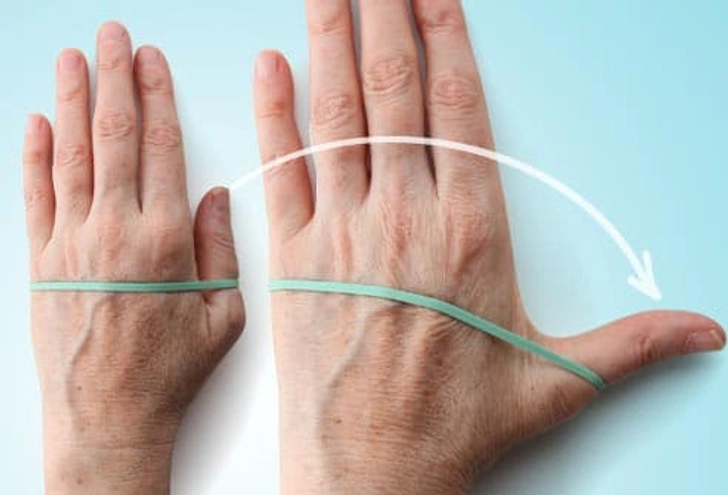
Trigger Thumb Exercises: Easy Exercises to Reduce Pain and Improve Mobility
Trigger Thumb Exercises are simple hand movements that help reduce pain. Trigger thumb is a frequent condition that can affect the movement of the thumb. Occurs when the tendon is swollen or inflamed and it is painful or hard to smoothly bend or straighten the thumb. The pain is often when moving the thumb, there is pain, stiffness or a clicking sound. Sometimes the thumb will be stuck that way.
Mild symptoms may be controlled by doing exercises for trigger thumb regularly, which is one of the safest methods. These exercises will help increase flexibility, decrease stiffness and strengthen muscles and tendons around the thumb joint. If done properly and regularly, they can help to enhance hand function and minimize discomfort.
The hand exercises for trigger thumb are mentioned by many health care providers during non-surgical treatment. By using gentle stretching and strengthening exercises, circulation can be improved and mobility can be maintained, while avoiding overloading the thumb.
Children can also experience trigger thumb. In these cases, pediatric trigger thumb exercises may be suggested under the supervision of a health care professional and to promote appropriate movement and to monitor the condition.
Many folks head to the internet to find some trigger thumb exercises with pictures so that they can see how to do each exercise properly. Images can be used step-by-step to reduce errors and enhance exercise technique.
For some patients, it is also preferable to use printable resources like an exercises for trigger thumb pdf to help them follow a specific exercise program at home or in physical therapy.
This guide provides a simple explanation in easy-to-understand language on the causes, symptoms, benefits and the best exercise technique for trigger thumb.
What Is Trigger Thumb?

Trigger thumb is the condition with the flexor tendon (the one that flexes the thumb) affected. Usually the tendon glides easily within the protective tube (tendon sheath). If inflammation occurs, the tendon will thicken, and it won’t be able to move as easily.
This can cause the thumb to become stuck, click or lock when moving. Some individuals are only able to straighten it with the other hand and others feel pain at the base of the thumb.
It can occur in children and adults. Can gradually get worse if not treated.
The initial treatment for most cases of trigger thumb is a trigger thumb exercise program, splinting, and activity modification, rather than advanced treatments.
Common Causes of Trigger Thumb
There are a number of reasons for trigger thumb.
Repetitive Hand Movements
Stress can be put on the thumb tendon by repeated gripping or pinching. With time, irritation can result and create inflammation.
Occupations that require repetitive movements of the hands, such as using tools, or keyboards may pose a higher risk.
Medical Conditions
Those who are affected by diabetes, rheumatoid arthritis or inflammatory diseases may be more likely to develop trigger thumb.
Age
Trigger thumb can happen at any age, but is more often found in adults, 40-60 years old.
Pediatric Trigger Thumb
Some children are born with, or are diagnosed with trigger thumb in early childhood. If necessary, a healthcare provider might monitor the condition and prescribe pediatric trigger thumb exercises, which are gentle exercises.
Signs and symptoms of Trigger Thumb
The symptoms start off mild and gradually get worse.
Common signs include:
- Pain at the bottom of the thumb.
- Rigidity particularly in the morning
- Clicking/popping with motion
- Unable to bend thumb and/or straighten thumb.
- Locking of thumb in bent position
- Softness and/or tenderness of the tendon
Treatment with hand exercises for trigger thumb can be done early to help preserve motion and decrease stiffness before symptoms get worse.
Trigger Thumb Exercises Benefits
Exercising regularly can help to keep tendons mobile and hands functional.
Improves Flexibility
Gentle stretching helps to keep the thumb moving freely and decreases stiffness.
Increases Blood Flow:The circulation of these nutrients is stimulated by movement and thus promotes healthy tissues.
Maintains Strength:The strengthening exercises support the thumb and hand muscles.
Reduces Morning Stiffness:Stretching the thumb daily can help in the movement of the thumb on waking up.
Supports Recovery:Conservative treatment for mild symptoms of trigger thumb may include exercises for trigger thumb, as recommended by many therapists.
When to Begin Exercises?
Before starting exercises, it is important to talk to a qualified health care provider, particularly if the thumb is very painful or locked.
Early movement exercises and rest and activity modification are helpful for individuals with mild symptoms.
If swelling or pain gets worse with exercise, the exercise should be discontinued and further medical evaluation should be sought.
Preparing Before Exercise
Doing the right things before you go makes for comfort and safety.
Warm the Hand:Soak the hand in warm water or wrap it with a warm towel for 5-10 minutes to help relax muscles and tendons.
Sit Comfortably:Rest forearm on table with wrist in a relaxed position.
Move Slowly:Do not make sudden or forceful movements, which may make the situation worse.
Stay Consistent:Short bouts of exercise throughout the day are more effective than occasional vigorous exercise.
Safety Tips
- Avoid pushing thumb into uncomfortable positions.
- If pain is getting bad, stop right away.
- Do exercises slowly and gradually.
- Do what your health care provider tells you.
- Be patient, it can take several weeks for improvement to be seen.
Safe hand exercises for trigger thumb will prevent additional aggravation and help with progressive improvement.
Table 1: Trigger Thumb Exercises and Their Benefits
| Exercise Name | How It Helps | Recommended Frequency |
| Thumb Stretch | Increases flexibility and reduces stiffness | 2–3 times daily |
| Thumb Flexion | Improves bending movement | 10 repetitions |
| Thumb Extension | Restores normal thumb motion | 10 repetitions |
| Tendon Gliding | Helps the tendon move smoothly | 10–15 repetitions |
| Thumb Opposition | Improves coordination and grip | 10 repetitions |
| Soft Ball Squeeze | Strengthens hand muscles | 10–15 repetitions |
| Rubber Band Exercise | Builds thumb stability | 8–10 repetitions |
| Passive Stretch | Relaxes tight muscles | Hold for 10 seconds |
The reason why exercise is often given as the first recommendation
With many cases of trigger thumb, surgery is not necessary for improvement. Treatment may involve conservative methods such as rest, splinting, anti-inflammatory medications and exercise.
Exercises to keep moving and stop stiffness and keep hands working. These are all simple, cheap, and can be done at home.
Patients often search for trigger thumb exercises with pictures as pictures help them to feel more comfortable in doing the exercises and helps them to perform the exercises correctly. Others like to download an exercises for trigger thumb pdf in order to have a program to perform everyday for rehabilitation.
Many people experience a gradual improvement in thumb movement and comfort over time with patience and consistency.
Best Exercises for Trigger Thumb
Regular movement will help to increase thumb flexibility and decrease stiffness. The exercises listed below are easy to do at home and do not need a lot of, if any, equipment. These must be performed slowly, and should not cause pain in the thumb.
The following exercises for trigger thumbare recommended by many therapists for a daily rehabilitation program for mild to moderate symptoms.
Thumb Extension Exercise
Purpose
This activity will enhance thumb mobility and will gently stretch the tendon.
How to Perform
- Put your hand on a flat surface on the table.
- Make sure to keep your fingers loose.
- Slowly move your thumb away from your palm.
- Hold for 5 seconds.
- Come back to starting position.
- Repeat 10 times.
Benefits
- Improves thumb flexibility
- Reduces stiffness
- Promotes healthy tendon function
This is a very simple hand exercise for trigger thumb for beginners.
Thumb Flexion Exercise
Purpose
Flexion of the thumb helps to return normal thumb mobility.
Steps
- Place hand in front of body.
- Gently flex thumb over hand.
- Attempt to reach the pinky’s base.
- Count to 5.
- Slowly move back to starting position.
- Repeat 10 to 15 times.
Benefits
- Adds flexibility to movement
- Improves tendon flexibility
- Gives assistance with hand activities each day
Passive Thumb Stretch
Purpose
This is a very simple stretch that can help increase mobility without relying on muscle strength.
Instructions
- Use other hand.
- Gently lift the involved thumb back.
- Only stretch as much as slight tension is experienced.
- Hold for 10 seconds.
- Release slowly.
- Repeat 8 to 10 times.
This stretch is commonly searched for by people looking for trigger thumb exercises with pictures .
Thumb Opposition Exercise
Purpose
This movement helps the child to develop coordination and grip.
Steps
- Place thumb on index finger.
- Keep touching each finger one at a time.
- Make a little circle with each finger.
- Repeat several times.
Benefits
- Improves finger coordination
- Strengthens hand muscles
- Improves fine motor skills
This is a good hand exercise for trigger thumb to assist in activities such as writing and dressing.
Tendon Gliding Exercise
Purpose
Tendon gliding helps the tendon move freely within the tendon sheath.
Instructions
- Start with fingers extended.
- Make a hook fist.
- Form a full fist.
- Extend your hand fully.
- Repeat slowly.
- Perform 10 repetitions.
Benefits
- Improves tendon movement
- Reduces stiffness
- Increases flexibility
This exercise is frequently incorporated in rehabilitation plans for problems with the hands.
Thumb Abduction Exercise
Purpose
This exercise works muscles that move the thumb out of the hand.
Steps
- Lay hand on table.
- Slide your thumb back and forth.
- Pause for 5 counts.
- Return slowly.
- Repeat 10 to 15 times.
Benefits
- Builds thumb strength
- Improves joint stability
- Supports gripping movements
Rubber Band Resistance Exercise
Purpose
Resistance exercises strengthen the thumb muscles.
Instructions
- Put a rubber band on the fingers and thumb.
- Move thumb out against resistance.
- Stop and hold for 3 seconds.
- Return slowly.
- Repeat 10 times.
Benefits
- Improves muscle strength
- Increases stability
- Supports recovery
These are more advanced exercises for trigger thumb that are only to be performed if they do not cause an increase in pain.
Soft Ball Squeeze
Purpose
Grip strengthening enhances the function of the hand as a whole.
Steps
- Hold a soft foam ball.
- Gently squeeze for 5 seconds.
- Release slowly.
- Repeat 15 times.
Benefits
- Improves grip strength
- Supports hand muscles
- Enhances coordination
If pain is experienced, do not squeeze too hard.
Finger Walking Exercise
Purpose
This exercise will help to increase the flexibility and control of the thumb.
Instructions
- Place your hand on a table.
- Slide your thumb up to each finger in turn.
- Get back to the starting position.
- Repeat slowly.
Benefits
- Improves mobility
- Increases coordination
- Supports tendon movement
Table Lift Exercise
Purpose
This exercise provides flex and strength to the thumb.
Steps
- Rest hand on table and palm flat.
- Slowly raise only thumb up.
- Pause for 5 seconds.
- Lower gently.
- Repeat 10 repetitions.
Benefits
- Strengthens supporting muscles
- Improves movement control
- Increases endurance
Table 2: Common Trigger Thumb Symptoms and Suitable Exercises
| Symptom | Best Exercise | Expected Benefit |
| Thumb stiffness | Thumb Stretch | Improves flexibility |
| Pain while moving | Passive Stretch | Reduces discomfort |
| Clicking sensation | Tendon Gliding | Promotes smooth tendon movement |
| Weak grip | Soft Ball Squeeze | Increases hand strength |
| Limited thumb motion | Thumb Flexion | Restores mobility |
| Difficulty holding objects | Thumb Opposition | Improves hand function |
| Thumb weakness | Rubber Band Exercise | Strengthens thumb muscles |
| Morning stiffness | Thumb Extension | Helps loosen the joint |
Pediatric Trigger Thumb Exercises
A gentle approach is indicated for children with trigger thumb. Any exercise program must always be supervised by a health care professional or pediatric therapist.
Safe pediatric trigger thumb exercises involve fun activities like picking up small toys, thumb stretching games and gentle grasping of objects. Such activities promote the natural motion in the joint without overloading it.
If resistance and/or pain is felt, parents should not force the thumb to straighten.
There should be regular checks with a specialist throughout treatment.
Trigger Thumb Exercises with Pictures
There are a lot of people who exercise wrong, simply because they don’t understand the instructions they read.
By searching the internet for trigger thumb exercises with pictures, patients can find out the correct hand position, direction of movement and posture. Visual demonstrations help to minimize errors and increase confidence in home rehabilitation.
Medical professionals frequently use illustrations along with verbal instructions to enhance education.
How to use the Printable Exercise Guides
It’s important to some patients to have a routine printed during their sessions of therapy.
A exercises for trigger thumb pdf can serve as a handy checklist, and can be performed daily at home or work. Printable guides can also be useful for patients to keep track of their progress and remain in line with their rehabilitation.
Physical therapists may offer an individual with specific exercise sheets about the person’s recovery objectives.
Common mistakes to prevent
Exercises are excellent, but can make it worse if performed incorrectly.
Below are some pitfalls to avoid:
- Used when doing exercise to the point of pain.
- Performing movements too quickly
- Using excessive force
- Skipping warm-up exercises
- Failure to consistently practice the skill
- Sometimes it takes time and patience, over the years.
How often should you be exercising?
- Typically, it is recommended to perform the exercises once or twice daily.
- Sessions should be 10-15 minutes each, depending on severity of the symptoms.
- If getting tired, rest between reps.
- It is consistency, NOT intensity! Small changes over time will often help to improve hand function and comfort.