
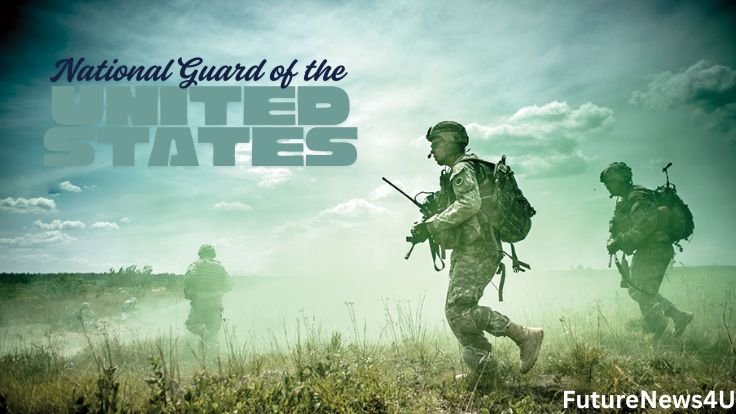
National Guard of the United States: History, Role, Duties and Importance
One of the most significant components of the emergency response and defence system of the country is the National Guard of the United States. It is used by the federal government as well as the individual states. It means that the National Guard may be deployed in military operations outside the country and also assist the communities within the country in case of a disaster or an emergency. In contrast to active-duty military forces, the members of the National Guard tend to live and serve within their communities. The National Guard is part of the community, emergency response, and is fully capable of joining military activities in the event of national security.
The concept of its mission is to be Citizen-Soldiers, ordinary people who are additionally soldiers of their country.
What Is the National Guard?
The National Guard is a reserve military comprised of the Army National Guard and the Air National Guard. Every state, along with Washington, D.C. and American territories, has its own National Guard.
Two Main Components
- Army National Guard –Ground-based military forces (infantry units, engineering, med, and log units).
- Air National Guard – Air support, aircraft operations, reconstruction, and transportation.
When activated under the United States Armed Forces, these forces are able to work independently at the state level or as a subset of the forces.
How the National Guard Works?
The National Guard is distinguished by the fact that it represents two chains of command:
| Control | Who Activates? | Purpose |
| State Government | Governor | Natural disasters, public emergencies, and local security |
| Federal Government | President | War, national defence, overseas missions |
This dual role makes the National Guard flexible and responsive.
The National Guard has a long and rich history

The National Guard dates back to 1636 when the pioneer settlements in America organised militia units to protect settlements. Such militias were later to form a defensive system of the United States.
Key Historical Milestones
- Militia Act of 1903:Reorganisedd the National Guard and made it a part of the federal armed forces.
- World Wars I and II:Thousands of Guardsmen were on foreign station.
- World Wars I and II: Thousands of Guardsmen were serving abroad.
- Cold War: Homeland defence and foreign deployment.
- 21 st Century:Nine years of service in Iraq, Afghanistan, disaster response and homeland security.
Duties and Responsibilities
Demonstrating accountability to stakeholders through the effective execution of duties and responsibilities. The roles of the National Guard are numerous. It aids the military activities and offers rescue during domestic disasters.
Military Duties
- Funding active-duty forces.
- Overseas combat missions
- Peacekeeping operations
- Security operations and border operations.
- Things like intelligence and surveillance.
Domestic Duties
- Response to disasters (hurricanes, floods, wildfires, and tornadoes)
- Search and rescue operations.
- Public health emergencies
- Reestablishing peace in civil disobedience.
- Supporting law enforcement at high-profile events.
This mixture of responsibilities renders the National Guard a crucial participant in national security and civilian welfare.
Training and Service Dedication
The typical training of members of the National Guard is:
- One weekend per month
- Two weeks once each year in annual training.
Nevertheless, they can be turned on whenever necessary. Although training is part-time, the skills that they are taught are professional and rigorous.
They receive training in:
- Military discipline
- Physical fitness
- Primary Care and Emergency Treatment.
- Rescue operations
- Equipment handling
- Leadership and teamwork
A large number of Guard soldiers have a civilian profession along with their military duty. They can serve as teachers or police officers or medical workers or engineers, or students in civilian life.
The role of the National Guard in times of emergencies
One of the most obvious roles is the national guard disaster response. The Guard is among the first to be of help in instances where the impacts of natural disasters have taken place.
Examples
- Hurricanes:evacuation, rescue and power restoration.
- Floods: Levee construction, family transfers, supply distribution.
- Wildfires:Firefighting, community protection.
- Earthquakes:First aid, cleanup, housing.
Their response time saves lives and brings about stability.
Location in Public Safety and Security
The National Guard is sometimes deployed in times of civil emergency, like:
- Riots
- Large protests
- Security threats
- Patriotic occasions (e.g., the opening of a presidential inauguration)
Their presence ensures the peace and safety of citizens.
National Guard vs Active-Duty Military
| Feature | National Guard | Active-Duty Military |
| Service Status | Part-time | Full-time |
| Primary Role | Domestic support & reserve military | Military operations worldwide |
| Command | State & Federal | Federal only |
| Deployments | When activated | Regular and long-term |
The National Guard is not a replacement for the active military — it complements it.
Advantages of Being in the National Guard
The benefits enjoyed by the members include:
- Monthly pay for training
- College tuition and partial education.
- Job training and leadership skills.
- Retirement and medical programs.
- Career stability
A great deal of individuals enlist in the Guard to work in their nation, yet remain in their civil professions.
The National Guard and Community Relationship
The community connectivity is one of the most powerful peculiarities of the National Guard. The members reside in the same cities and towns which they guard. This instils confidence and empowerment in local communities.
Importance in Modern America
It needs the National Guard to:
- Homeland defense
- Emergency disaster support
- Securing the critical infrastructure.
- Funding peace missions in the world.
The national guard is a versatile and reliable entity in an era when natural calamities as well as international struggles are increasingly becoming complicated.
Conclusion
The National Guard of the United States is not just a reserve army. It is a community-based dual-purpose force that assists in life-saving missions back home and military missions overseas. It has a long and rich history that is entrenched in the idea of citizen-soldier ordinary people who volunteer to serve their nation. The National Guard is still an important part of national defence and community safety due to its devotion, training and close relationships with the community.
The Guard’s mission is clear:
To protect, to serve, and to be ready whenever the nation needs help.
Frequently Asked Questions
Q1. What is the main role of the National Guard of the United States?
The National Guard is a dual-fold mission. It aids state governments during emergencies as a result of disasters, civil disturbances and law enforcement activities. It also aids the federal government in national defence operations, military operations in foreign countries, and homeland security operations.
Q2. What is the difference between the National Guard, the Army, and the Air Force of the U.S?
The National Guard is also unique since it is controlled by both the state government and the federal government, whereas the U.S. Army and Air Force are commanded only by the federal government. The members of the National Guard have the option of working part-time, and they are only activated when necessary, as opposed to the active-duty forces, which work full-time.
Q3. Who is the commander of the National Guard?
Under normal circumstances, each of the states has a National Guard headed by the State Governor. Nevertheless, the President of the United States has the power to federalise the National Guard for national missions, which places them under temporary federal jurisdiction.
Q4. What are the benefits of the members of the National Guard?
The members usually get paid throughout the periods of training, tuition benefits, inexpensive health insurance, retirement benefits, housing allowances upon activation, and use of military training and career-building educational programs.
Q5. Are National Guard soldiers deployable overseas?
Yes. Even though the National Guard is concerned with domestic operations, its forces may be sent to foreign countries to assist U.S. military operations, peacekeeping missions, humanitarian aid, and defence operations.
Q6. What is the frequency of training amongst the members of the National Guard?
The majority of the members train on one weekend a month and have a more intensive training that is referred to as Annual Training, normally two weeks a year. The training routine can be increased during deployment preparation.
Q7. Are members of the National Guard used as civilians?
Yes, and many of the members of the National Guard are full-time and part-time workers in the adult world or students in school. This is among the major reasons why people would like to join the Guard due to its flexibility.
Q8. What is the eligibility requirement to join the National Guard?
The applicants must be aged between 17 and 35, with a high school diploma or equivalent, physically fit, and have a satisfactory background check, as a rule. It can have varying requirements which are based on the state and the position.