
Narco Wars: Has Mexico Become a Failed State?
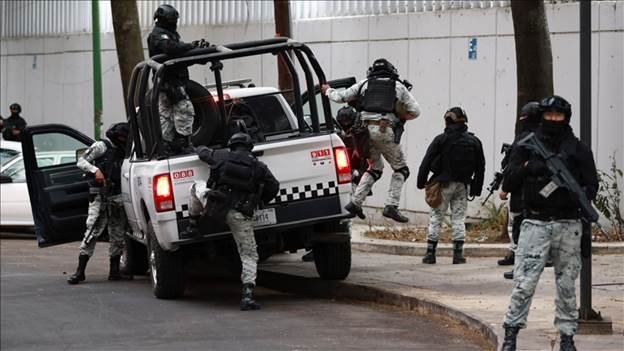
Mexican crime syndicates have existed for decades and only became more powerful after the collapse of the Cali and Medellín cartels in Colombia in the 1990s. Now, Mexican cartels command the wholesale drug markets and about 90% of the cocaine entering the United States. Violence between the different syndicates has only increased with the arrests of key cartel leaders. These organizations are fighting to control more trafficking routes into the United States. It is estimated the Mexican cartels make over 50 billion dollars annually in drug proceeds. Violence in Mexico remains high with the death toll anywhere from 60,000 to 120,000 in the last decade. Police and government corruption is still a major problem in Mexico and makes it difficult for the United States government to have an equal partner in the war on drugs. These cartels are vicious and ruthless and will stop at nothing to command and increase their territory.
The Sinaloa Cartel: Global Operations and Criminal Network Overview

The Sinaloa Cartel also known as C.D.S. (Cártel de Sinaloa) is one of the largest drug trafficking crime syndicates in Mexico established in the late 1980s. The organization was allegedly headed by Ismael Zambada Garcia, aka “El Mayo” until his recent arrest by federal authorities in the United States. This group has operations in Mexican states of Sinaloa, Baja California, Durango, Sonora, and Chihuahua with a strong presence in Colombia and the United States. CDS operates in the “Golden Triangle” region that is a major producer of opium and marijuana. According to the U.S. authorities, Sinaloa cartels in the last decade has imported over 200 tons of cocaine and large amounts of heroin into the United States. CDS is the most active Mexican cartel in Colombia who works with the National Liberation Army (ELN) and Clan de Golfo, a paramilitary gang. CDS does not only purchase cocaine but also invest in production directly in Colombia. CDS also has major methamphetamine operations in U.S. cities and is primarily involved in the illegal trafficking of cocaine, heroin, methamphetamine, fentanyl, cannabis and MDMA. The Sinaloa cartel is the main supplier of fentanyl to the United States. It appears CDS’s main rival now is Jalisco New Generation Cartel (CJNG) with turf battles occurring in the Mexican regions of Baja California, Zacatecas, Jalisco, Sonora and Chiapas. These two cartels are also battling in parts of Colombia in the pacific coast area of Nariño, Catatumbo, Bajo Cauca in Antioquia, Norte de Cauca and Magdalena. According to Colombian authorities, Mexican drug trafficking groups have had numerous violent encounters in Colombia displacing thousands of residents from their homes.
U.S. Action Against the Sinaloa Cartel: Conviction of Joaquín “El Chapo” Guzmán and Drug Network Bust
In 2017, the former leader of the Sinaloa cartel, Joaquin “El Chapo” Guzman was extradited to the United States on federal drug trafficking and racketeering conspiracy charges to include murder, kidnapping, money laundering, weapons violations and other federal offenses. In January 2019, Guzman was found guilty on all counts by a federal jury in the Southern District of New York in Manhattan. In July 2019, a federal judge sentenced Guzman to life in prison plus thirty years with a forfeiture order of 12.8 billion dollars. Guzman is currently incarcerated at a supermax, high security federal prison in Florence, Colorado.
In June 2021, sixty members of a methamphetamine trafficking network with ties to the Sinaloa Cartel in San Diego, California were indicted on federal charges in Southern District of California for conspiracy, drug trafficking money laundering, firearms violations and other federal offenses. Law enforcement seized over 220 pounds of methamphetamine, ninety firearms, $250,000 in U.S. currency, properties and high-end vehicles. According to the federal indictment, this San Diego network smuggled thousands of kilograms of methamphetamine from the Sinaloa Cartel to the United States in hidden compartments in different kinds of vehicles. They also used trains, commercial airplanes, the U.S. Mail and commercial delivery services to dispense the methamphetamine throughout the United States and the world. The drug proceeds were returned to the network via shipments of bulk cash, structured cash deposits in bank accounts and in money transferred systems. The members carried firearms and used encrypted communication providers with each other.
U.S. Indictments and Sanctions Target Sinaloa Cartel Leadership and International Drug Trafficking Operations
In March 2021, five alleged members of the Sinaloa Cartel were federally indicted in Chicago on drug trafficking conspiracy charges. In September 2021, Miguel Baez Guevara, a U.S. citizen living in Mexico was indicted by a federal grand jury on seventeen counts on drug trafficking conspiracy and Continuing a Criminal Enterprise charge (CCE) often used against top leaders of a drug trafficking organization. According to the indictment, Guevara’s organization imported heroin, methamphetamine and cocaine directly to Alaska from Mexico. Guevara targeted Alaska since the organization made higher profits due to the significant distance from Mexico. Guevara allegedly had membership in the Sinaloa Cartel. Guevara’s network recruited drug couriers who lived in Alaska to travel to Mexico and pick-up the illegal drugs. According to law enforcement, couriers often travelled in small groups to pick-up 250 grams of narcotics in Mexico and return to Alaska. Allegedly, Guevara made it clear to the couriers of his connections with the Sinaloa Cartel and the serious and violent consequences if any drugs were stolen or if anyone cooperated with law enforcement. On September 10, 2021, Mexican authorities extradited Guevara to the United States on federal charges.
In late September 2021, authorities in the United States indicted and sanctioned the Sinaloa Cartel’s hierarchy. According to the U.S. Treasury’s Office of Foreign Assets Control (OFAC), Mexican national Sergio Valenzuela was designated as a Narcotics Trafficker pursuant to the Foreign Narcotics Kingpin Designation Act. Allegedly, Valenzuela is a Sinaloa Cartel Plaza boss who oversees a major drug trafficking corridor in Mexico and reports directly to the leader of the CDS, Ismael Zambada Garcia. OFAC also designated seven other CDS members and two Mexican entities. The two companies in Mexico designated by OFAC are allegedly owned or controlled by Rochin Hurtado and Marrufo Cabrera, Acuaindustria Narciso Mendoza, S.C de R.L. de C.V. and Club Indios Rojos de Juarez, S.A. de C.V. Federal prosecutors with the U.S. State Department announced an increased reward of $15 million dollars for information that leads to the arrest or conviction of the current leader of the Sinaloa Cartel, Zambada Garcia who was previously indicted on federal charges.
Cartel Violence and the Sonora Massacre (2019)
In November 2019, nine American women and children were killed in an ambush between the Sinaloa cartel and another rival gang in the Sonora state of Mexico. A Mormon community had settled in Mexico for decades, and these families were traveling to meet relatives in the United States. According to Mexican authorities, a gunman opened fire on three families in three different vehicles. As bullets pummeled the first vehicle, a mother stepped out of her vehicle waiving her arms to show they were not gang affiliated. She was shot dead. The second vehicle was fired upon killing another mother and her two sons. The third vehicle was riddled with bullets and burst into flames killing another mother and her four children. Authorities believe La Linea arm of the Chihuahua-based Juarez Cartel sent gunman to defend the border state area after attacks by the Los Salazar faction of the Sinaloa Cartel.
Escalating Cartel War in Zacatecas
In January 2022, sixteen bodies were discovered by Mexican authorities in two different cities in the state of Zacatecas in what appeared to be a bloody war between the two large cartel rivals, Sinaloa and Jalisco. The year prior, law enforcement found numerous bodies hanging in public places in the northern state. In June 2021, eighteen bullet-ridden bodies were discovered in Valparaiso, Zacatecas in another shoot-out between CJNG and CDS battling for control for the northern state of Zacatecas. According to Mexican officials, 948 people have been killed in the first 10 months of 2021 in Zacatecas, a significant increase from the previous year.
Rise and Power of the Jalisco New Generation Cartel
The Jalisco New Generation Cartel, also known as CJNG is a heavily armed criminal enterprise based in Jalisco, Mexico. Nemesio Oseguera Cervantes, aka “El Mencho” was the head of the CJNG until his recent death in a shoot-out with Mexican Special Forces in Tapalpa, Jalisco. The United States provided critical intelligence that assisted with this operation to locate Cervantes. He was the most wanted drug lord in Mexico and the United States. Jalisco Cartel is an extremely violent and ruthless syndicate killing rivals or anyone else to advance their criminal enterprise. According to Mexican authorities, CJNG is the most dangerous cartel in Mexico and second most powerful behind the Sinaloa Cartel. Both cartels are heavily contesting the Mexican states of Chiapas and Zacatecas. Many believe CJNG has over 100 methamphetamine labs in Mexico and nets upward to 15 billion dollars annually in illegal drug trafficking. In 2017, CJNG broke its alliance with the Sinaloa Cartel and by 2018 become the second most powerful crime syndicate in Mexico. Former high-ranking members of the Jalisco Cartels have left CJNG to start a rival group called the Nueva Plaza Cartel. Both groups are now fighting for control of Guadalajara in the state of Jalisco.
Targeted Attacks on Police and Rival Groups
In 2019, twelve police officers were killed by CJNG in one week in brutal fashion. Officer Arellano, a decorated officer was kidnapped with her husband and son in the city of Irapuato. Arellano and her family were abducted from their home by armed gunmen. Her husband and son were released by the kidnappers; tragically, Arellano’s body was later found dismembered in a rural road with the initials on a cardboard CJNG. In the same week, a gunman opened fire on two officers parked in a patrol vehicle outside a pharmacy. Officer Duarte died from the injuries she had sustained. The Jalisco Cartel and the Santa Rosa de Lima Cartel have been feuding for years in the state of Guanajuato. During the same week, CJNG gunmen attacked a police station in the city of Villagrán. According to reports, hooded men stormed the police station then shot three officers dead and abducted four more officers. Their bodies were later found on the Pan-American Highway. Later, two more officers were killed by CJNG members in the towns of León and Celaya in Guanajuato.
Law Enforcement Crackdowns and Arrests
In 2020, seven hundred and fifty members and associates of CJNG were indicted and arrested on federal drug trafficking charges. Law enforcement seized more than twenty kilograms of narcotics and $20 million dollars belonging to the CJNG. According to authorities, CJNG has hubs in Los Angeles, New York, Houston, Chicago, Atlanta and the Southwest border. The boss of the Jalisco cartel during this time, Nemesio Oseguera Cervantes was also federally charged with running a criminal enterprise that carried out acts of violence, murders, assaults, kidnappings, assassinations and torture. DEA estimates CJNG has a presence in at least 24 of Mexico’s 32 states.
In June 2021, according to sources, CJNG abducted several members of an elite police unit in Guanajuato and tortured them to obtain names and addresses of other officers. CJNG gunmen would then murder these officers in their homes in front of their families. It appears CJNG is actively hunting police officers and executing them in Guanajuato, an open season against law enforcement.
Arrests of Cartel Family Members
In November 2021, Mexican authorities arrested the wife of CJNG boss Nemesio Oseguera Cervantes, “El Mencho.” Rosalinda Gonzalez Valencia was arrested in Zapopan near Guadalajara. In May 2020, Oseguera’s daughter Jessica Johanna Oseguera Gonzalez plead guilty in U.S. federal court to carrying out financial dealings with Mexican firms identified as drug traffickers.
Impact of Cartel Violence on Mexico
The Mexican drug cartels are some of the most ruthless crime syndicates in the world. The failure of the current Mexican administration to aggressively deal with these groups has emboldened these criminals to a level never seen before in Mexico. They terrorize communities and have made Mexico a house of horrors with inhumane torturing, dismembering, burning, and beheadings, a norm for these violent syndicates. These factions have become blood thirsty terrorists praying on innocent people just to enhance their murderous reputation. If these killing machines are not stopped now, Mexico will be a failed state with these vicious drug lords controlling different territories in Mexico very similar to Somalia in Africa.
The Continuing Narco Wars: U.S.–Mexico Strategy Against Cartels After Nemesio Oseguera Cervantes
The United States and Mexico need an aggressive, comprehensive strategy to dismantle and destroy these crime syndicates since appeasement will not work with these gangs. The Mexican government with the assistance of the United States must declare war on these cartels and use military action with every weapon at their disposal in dealing with these terrorists. These factions do not respect weakness and will only grow in strength killing more innocent people in Mexico and the United States. There must be stronger border security in the United States to combat these crime syndicates operating in America. Mexico’s problems have become American problems with no real solution in sight. There needs to be two-pronged approach here in the U.S dealing with drug addiction and stopping the flow of illegal drugs from Mexico. The cartels must be broken and need to be stopped for the sake of both countries and the world. These crime syndicates always continue to operate regardless of leadership at the top. El Mencho is gone today, and someone else is running this multi-billion dollar enterprise. The Narco Wars continue.