
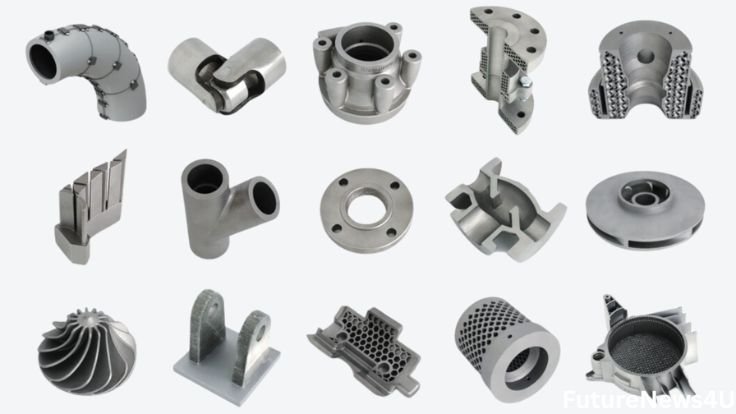
The Growing Importance of Aluminium Die Casting in Modern Manufacturing
The expansion of manufacturers into new sectors opens up a need for new materials that are strong, lightweight, and durable. Of the multiple alternatives, aluminum die casting provides the best answer. This technology has also been the most prevalent in the automotive, electronics, and aerospace industries for producing quality metal components.
What does Aluminium Die Casting Involve?
Aluminium die casting involves creating metal components through the injection of molten aluminum into a mold under extreme pressure. This is a two-part steel mold called a die and, after the liquid aluminum is poured into the die, it takes the form of the cavity. After the aluminum cools and solidifies, the completed part is unclamped and is ready for further work after cleaning.
The efficiency of aluminum die casting is further enhanced through the production of near net shape components and intricate complex geometrical configurations. High quality casting will have smooth surfaces and be within the specified tolerances of the target engineering dimensions.

Why Aluminium?
Light weight, non-rusting, and die castable at cheap prices, aluminium is ideal for die casting. Rust, is formed on iron and steel, aluminium only oxidizes and forms an oxide coating that protects it from further corrosion. Aluminium also has unrivaled heat and electricity conductive properties that makes it suitable for automobile engine components, electrical housings, and certain lighting.
Another benefit is recyclability; metal can be melted and reused an infinite number of times with no loss in quality. This infinite potential makes environmentally conscious aluminum die casting economically sensible.
The process of die casting aluminum involves several steps
1. Preparing the Mold: The die is cleaned, and a die lubricant is applied to facilitate the die’s opening and closing during the casting process.
2. Melting the Aluminum: The aluminum is heated to the appropriate temperature until it becomes liquid.
3. Injecting the Metal: The molten aluminum is poured into the die, and injection pressure is applied to fill the die cavity.
4. Cooling and Solidifying: The aluminum is allowed to cool and completely solidify in the die.
5. Ejection: The die is opened, and the solidified casting is removed.
6. Trimming and Finishing: Unwanted metal is cut along designated areas to provide excess.
Each of the steps requires a high level of precision. The quality of the finished product can be compromised if one of the steps is not executed with the required attention. Failure in one step can be caused by the others, thus compromising the quality of the finished product.
Aluminum Die Casting Machines
When aluminum die casting is discussed, references to die casting machines encompass:
• Hot chamber machines
• Cold chamber machines
Hot chamber machines are utilized for die casting zinc as it is low melting point alloy. Cold chamber machines, on the other hand, are used for ‘aluminum die casting’ as it is a higher melting point alloy. For the cold chamber process, quality and strength is assured as molten aluminum is poured from an external furnace.
Advantages of aluminum die casting
Multiple advantages of aluminum die casting include the following:
1. Process precision: Detailing of parts is achieved as the process allows for the manufacturing of close tolerance parts.
2. Surface finishing: Cast parts are aesthetically clean and pleasing and require minimal post polishing.
3. Light construction: Ease of transport is achieved due to the lightness of the parts.
4. Durability: Long life with load bearing capacity from the parts.
5. Low cost: After the first mold has been created, it is economically viable to mass produce parts at a low cost.
These advantages demonstrate the reason ‘aluminum die casting’ is used in industries where the visual and functional aspects at a high standard are required.
Application of Aluminium die casting
Automotive Applications
The automotive sector is one of the first noted uses of “aluminium die casting.” The automotive industry uses this process to manufacture:
• Engine blocks
• Gearboxes
• Motor housings
• Wheels and Brackets
Automobile manufacturers prefer die cast aluminium alloy components due to their contribution to reducing overall vehicle weight. This reduces fuel consumption, improves corrosion resistance, and prolongs the usefulness of a part.
Applications in the Electronics Industry and Aerospace Sector
Aluminium die casting is also widely used to manufacture electronic heat sinks, which include enclosures and connectors. These components form a protective casing around a circuit and serve a dual purpose by dissipating heat.
The aerospace sector appreciates the value of lightweight, high-strength materials. Lightweight parts made of cast aluminium improve fuel efficiency and overall flight performance of an aircraft. The ability to cast and form aluminium into complex shapes allows engineers to design more novel approaches.
Sustainability
With the push towards greater Industry, aluminium die casting is aligned with this vision as it is one of the few metals that can be repeatedly recycled and re-cast as new.
Almost all of the energy needed to recycle aluminium is less than the energy that is required to create new aluminium.
The most recent industrial designs focus on the emission mitigation of waste material. This strategic approach also aids in the net eco-efficiency improvement of the systems processes.
Issues in Aluminium Die Casting
Despite the impact of the approach being mostly positive, there are issues that must be dealt with:
• Tooling Cost: The designing and the construction of the tools is skillful, time intensive, and costly.
• Porosity: The air that is trapped in the molten metal will cool, resulting in voids in the casting.
• Maintenance: The regular maintenance of the machinery and tools will entirely affect operational consistency.
The impact of these challenges can be lessened by the adoption of new methods like computer controlled systems and vacuum casting.
Technological advances
The die casting of aluminium under new construction processes is managed and automated through technology. The CNC machines perform the shape and trim operations with precision. System designers are assisted in an efficient and innovative way through computer samplers. The use of robotics also lessens productivity and improves.
Robots take over time-consuming, dangerous, monotonous, and repetitive tasks before the system gets to human level.
Future of Aluminium Die Casting
Future demands for Aluminium Die Casting will remain strong and acclaimed for its lightweight and streamlined efficiency, particularly with the rise of smart devices, electric automobiles, and renewables. The need for lightweight components will increase the demand for Aluminium Die Casting technologies.
Advancements such as AI-driven quality checks and the new green energy alternatives make the die-casting processes even more sophisticated. Companies driven by these technologies will be more competitive in the global market.
Conclusion
Aluminium die casting remains one of the key new-age manufacturing processes. It combines, ‘the die-casting process gives, Strength with beauty and efficiency, and allows the production of lightweight components, highly durable for automobiles, aircraft and consumer electronics, to be used in. Progressing technologies will allow the process `Aluminium Die Casting’ to grow globally without bounds. Innovative industries will rely on Aluminium Die Casting for accuracy due to its environmentally sustainable nature, and it will continue to endure into the distant future.