
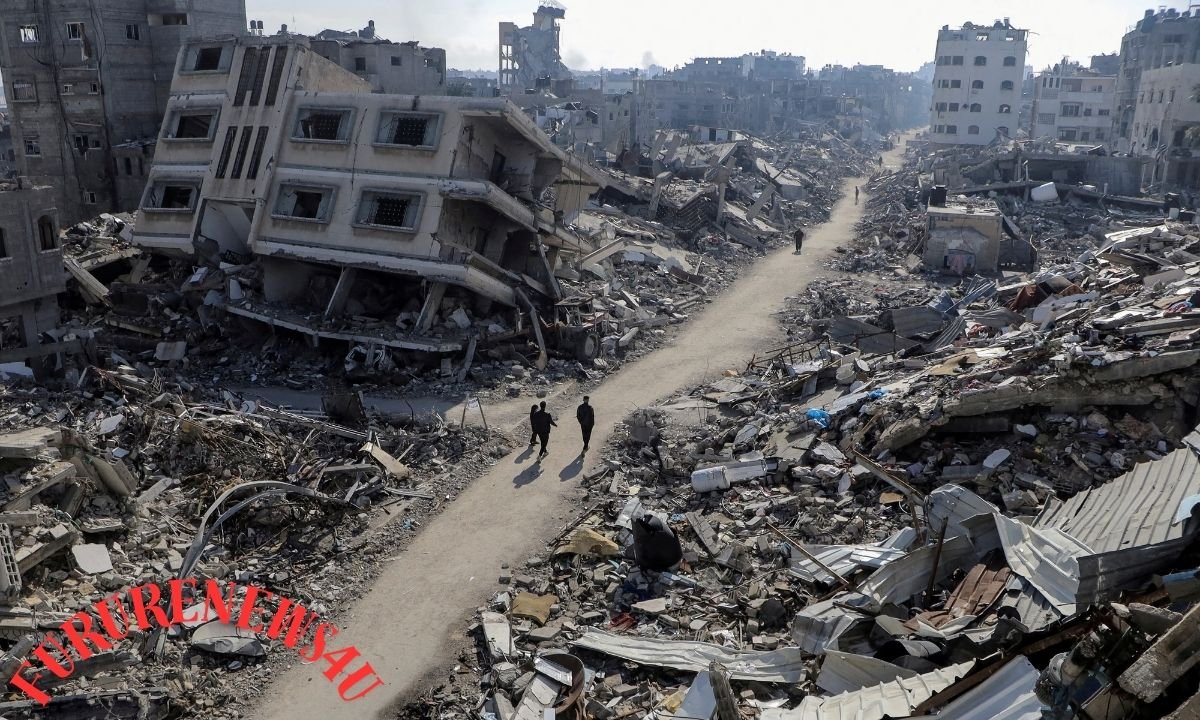
Gaza Talks Underway on Anniversary of Oct. 7 Attack — What Happened and What’s at Stake
It initiated indirect negotiations between Israel and Hamas at Sharm el-Sheikh, Egypt, with mediators attempting to work out a deal that will be based on a U.S. 20-point plan. The talks are expected to end the fighting, release hostages, and establish conditions for the future of Gaza. The initial stage of the negotiations ended in several hours, and mediators reported that the parties had reached a consensus on the majority of the requirements of the first phase, which are a ceasefire and the freeing of hostages.
The specific, recorded facts on such live updates are enumerated in this article. It describes the strategy, the short-term actions that are put forth, the key areas of contention, responses, and what to look out for next.
Where and who
- Negotiations started at Sharm el-Sheikh, Egypt.
- Indirect negotiations occur between Israel and Hamas, and they are mediated by Egypt, Qatar, and the United States. The negotiating team of the U.S. is headed by envoy Steve Witkoff; Jared Kushner was reported to have come to the talks. The Israeli delegation is headed by Ron Dermer, and the Hamas delegation by Khalil al-Hayyah.
The U.S. 20-point plan — the essentials reported

The strategy, commonly explained in coverage, outlines several initial steps:
- An urgent truce between Israel and Hamas.
- A hostage-in-prisoner bid: Hamas would release hostages it holds. The plan saw Hamas releasing all the remaining hostages (it was reported 48 in total), and Israel releasing hundreds of Palestinian inmates. Israel has reported that it suspects that some 20 of those hostages remain alive.
- Phased withdrawal of Israel in some of the areas of Gaza after disarmament and other requirements are realized.
- The transfer of the rule in Gaza to a temporary, technocratic government under the oversight of the international community. The vision is that Hamas will be disarmed and military infrastructure destroyed, with those members who renounce violence being the only ones left to stay in very strict situations.
These are the main aspects that mediators indicated that the initial round was to be translated into practical actions.
What the participants said — immediate signals
- The Egyptian official who talked in a confidential condition said that the first round was over and that the parties were in agreement on most of the first phase terms, such as the ceasefire and the release of hostages. Negotiations were to resume the next day.
- U.S. President Donald Trump said that there was tremendous improvement and asked both parties to hurry. He replied that he believed a bargain would be made in the near future.
The White House claimed that technical staff members such as Steve Witkoff and Jared Kushner were working on the details and going through lists of hostages and political inmates to release. In response, the officials at the white house indicated they wanted to make sure that the environment was conducive so that safe releases could be made.
Humanitarian situation reported and numbers
- The Independent reported that the Palestinian death toll, according to the health ministry of Gaza, was 67,160 as of the morning of the talks. The war was initiated due to the attack on nearly 1,200 individuals in Israel by Hamas on Oct. 7, 2023.
- ABC News reported appalling statistics quoted by Gaza authorities: on average, 92 Palestinians were killed daily in 730 days of operation between the 7th of October and 23rthe d of December 2023, according to the Gaza Government Media Office.
These are figures released by the sources you have given and emphasize the humanitarian urgency that is fueling discussions.
Principal areas of concern in reporting
According to the report, some significant barriers that should be overcome by the negotiators were elaborated:
- Disarmament – Israel is firm that Hamas should first be disarmed before a full withdrawal. Hamas has not stated that it will disarm completely.
- Timing and sequencing – The 72-hour target in hostage releases under the plan will rely on accurate sequencing still to be made by the parties.
- Security operations –Israel considers the right to hunt down militants at will, and it is hard to enforce a strict ceasefire.
- Checking and balancing –The use of disarmament, transfer of prisoners, and gradual withdrawals will involve the international mechanisms for checking and balancing.
- Continued violence eroding trust –It was reported that Israeli strikes persisted despite the commencement of talks, including attacks that struck people who were getting together to receive humanitarian aid- a move that makes it questionable when it comes to commitments to the ceasefire.
Political risks and pressures
- The pressure of coalition politics is an issue within Israel. Hard-line people and coalition members may not consider concessions and endanger the stability of the government in case they perceive that the terms are too generous. Reporting Netanyahu is obliged to juggle foreign pressure and domestic politics.
- The players include regional players of the game like Egypt, Qatar, Turkey, Saudi Arabia, and Western mediators who are pushing agreements, and also to monitor and assist in reconstruction. Their assistance is needed to both push and pull. Agreements, as well as to offer monitoring and reconstruction assistance.
What the plan would mean in practice (as reported)
- In case the initial stage succeeds, hostage liberation would be done within a limited duration. In exchange, Israel would release a list of Palestinian prisoners that would be of a specified number.
- In case they verify the move by Hamas to demilitarize, the Israeli forces would gradually withdraw to previously agreed positions. A peacekeeping force and transitional civilian government would be deployed to provide humanitarian assistance and reconstruction.
How markets and international voices reacted
- There has been optimism in market reaction in the region; Tel Aviv stocks went up on news of the possibility of the war coming to an end.
- The foreign minister of Germany called the process one of the most promising solutions in two years, making clear that there was a high level of international interest in a negotiated solution.
What to watch next — the short list
- Hostage lists and live exchanges:Do living hostages get released through the windows in question? Who is on the lists?
- Concrete sequencing and third-party monitors: Do the mediators establish concrete sequencing and third-party monitors?
- Macropolitics in Israel: Can Netanyahu maintain the unity of the coalition in case of necessary concessions?
- Violence persists: Strikes or attacks again, or de-escalation hold?
Summary of facts on hand (electric reported facts)
- Negotiations kick off in Sharm el-Sheikh, Egypt, and round one concluded in a couple of hours.
- The discussions focus on the U.S. 20-point plan that will involve a ceasefire, the release of hostages, the gradual withdrawal of Israel, and the implementation of technocratic rule.
- It was stated that 48 hostages were still kept in Gaza; Israel thinks that approximately 20 of them still live.
- According to The Independent, the health ministry of Gaza recorded 67 deaths, as Gaza officials reported an average of 92 deaths per day over two years since the date of October 7, 2023.
- Reportedly, Steve Witkowsky, an envoy of the U.S., heads the U.S. delegation to the negotiation table, and Jared Kushner also participated. The negotiators of Israel and Hamas are Ron Dermer and Khalil al-Hayyah, respectively.
FAQs
Q: What location are the negotiations being held in?
Sharm el-Sheikh, Egypt.
Q: Who is leading the U.S. team?
Jared Kushner is also reported to be joining, and Steve Witkoff.
Q: How many hostages remain?
The figure on reporting is 48 still, of whom perhaps 20 are supposed to be living.
Q: Will the talks be quick?
Analysts and officials caution that a gradual and measured progress will take place; the initial stage is centered on hostage release and a truce.
Note on sources and methodology
The article is grounded on the live coverage that you conducted in the Independent and ABC News on 6-7 October 2025. I have only included the precise facts that such outlets reported in their live reports and summaries, and mentioned them below the corresponding items. In case you desire, I will include supporting information from other sources (CNN, SMH, Reuters, AP) and attribute each new fact.
Pingback: Israel and Hamas Enter Gaza Peace Talks