
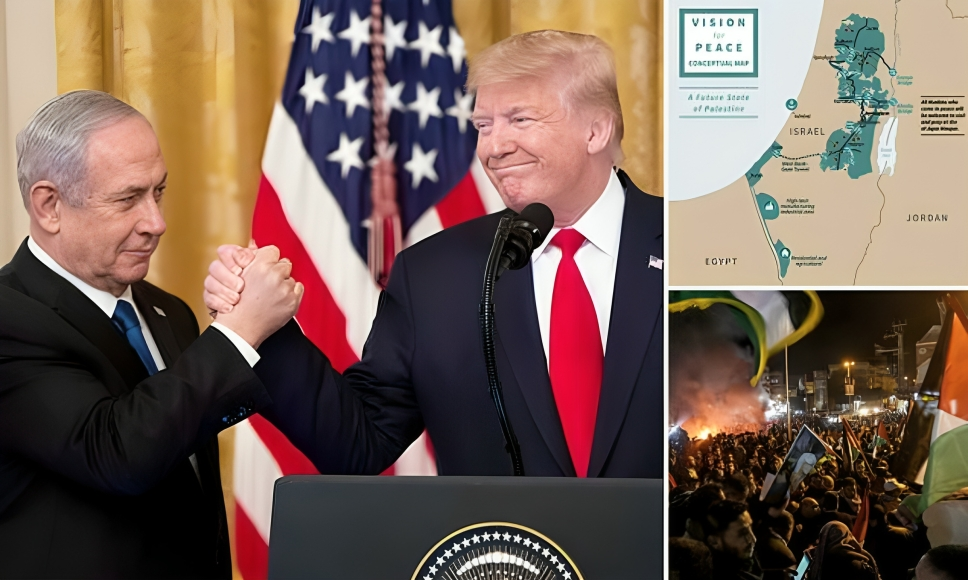
Major Obstacles Ahead as Israel and Hamas Enter Gaza Peace Talks
On October 6, 2025, in Sharm el-Sheikh, Egypt, indirect talks between the Israelis and the Hamas started on a U.S.-written 20-point peace proposalthat would end the war and hostage releases. Nevertheless, despite being optimistic at the start, there are numerous challenges that are looming to bring down the initiative.
Here is a detailed examination of what the plan says, where it is not clear, the points of contention, responses, risks, and what would have to take place next.
Peace Plan and The Context
What the U.S. Proposal Seeks
- The 20-point plan recommends an immediate cease fire, exchange of hostages, and withdrawal of Israeli troops in some areas of Gaza upon agreed lines.
- Hamas will be expected to forego control of power in Gaza and former Hamas agents will be permitted to stay on condition (renouncement of violence, disarmament).
- It is also a plan of technocratic governance transition, and it is significant in terms of humanitarian access, reconstruction and security oversight.
What’s Been Clear So Far
- There has been conditional congruence on the framework by both sides. The plan was passed under pressure on the part of Israel Prime Minister Netanyahu, but he came with caveats particularly on withdrawal and control of security.
- It is suggested in the plan that hostages (both alive and dead) should be exchanged within 72 hours after Israel officially accepts the deal.
- Israel reports that it has 48 hostages in Gaza of whom 20 are thought to be alive.
Such information provides order to the talks. Yet, the success of any end game deal is based on answering a lot of unresolved questions.
Key Hurdles and Vague Areas
There are still some burning questions that are unclear or disputable even during the start of talks. These are the possible dealbreakers.
Lack of Clear Timelines
- There are no specific dates given in the plan as to when stages like disarmament or total withdrawal will come. This vagueness would give each party the chance to stall or back out.
- Although the hostage exchange condition of 72 hours is quoted frequently, it is not very clear at what point the 72-hour time ought to begin as Israel accepts the offer or declares acceptance.
Governance of Gaza Disarmament
- The main requirement is that Hamas should disarm completely. Hamas has always been against complete disarmament because they regard their weapons as a security and defense measure.
- The issue as to who then rules Gaza is charged. The plan indicates a Palestinian technocratic government that is supervised by the international community. Hamas however has never to date agreed to complete disarmament or exclusion but has only agreed to administrative handover.
Israeli Retaliation and Security Limitations

- Israel desires to have control to hunt down Hamas fighters despite withdrawals. That creates strains with the concept of a ceasefire.
- Already, withdrawal lines and pledges are in place as per some Israeli sources. This diminishes room to manoeuvre during negotiations.
Further Military Response and Confidence
- Even as the negotiations began, Israeli airstrikes were going on in Gaza, even during that morning, murdering civilians trying to get humanitarian assistance. That undermines trust.
- Hamas should have hope that the truce will be effective. The continued violence is a threat of one of the parties pulling out or sabotaging the pact.
Political Pressure and Stability of Coalition in Israel
- Some of the coalition allies in Israel have already threatened to withdraw in case the government compromises.
- Netanyahu has to juggle between American and external pressure, and domestic hardliners against territorial and elasticity toward Palestine as well.
Humanitarian/logistical challenges
- Years of war have ravaged Gaza to a great mark. There is destruction of infrastructure, roads, hospitals and supply systems. Making movements, rebuilding, and safe releases in the time of devastation is complicated.
- The bodies of dead hostages can also be retrieved slower in a wrecked terrain even when living hostages can be transported faster.
Reactions & Initial Signals
Markets & Economy
- The stock market in Tel Aviv shot to all-time highs, and this was due to the hope of investors that the war could come to an end.
- This is an indication that even the mention of peace changes the mood in the markets of the region.
Foreign and Regional Voices
- The Foreign Minister of Germany described the negotiation as the most promising ever with regard to cooperation between Arab, Israeli, and Palestinian stakeholders.
- The news portrays that there is harmony on the peace structure, but the level of substantiation of agreement is doubtful.
What Could Be the Future in the Days to come?
Negotiators, mediators and observers are looking at a gradual step by step improvement, and not a quick fix.
Likely steps:
- Hamas and Israel will keep having indirect talks, but those will be initially behind the scenes. The Israeli and American delegates can hold on until certain parameters have been cleared.
- The initial step will probably emphasize the hostage-prisoner exchange as something more tangible. Should such a move be successful, attention will switch to withdrawal and management.
- This will require the introduction of monitoring and verification mechanisms so that the plan is credible.
- Any backsliding or refusal on any major point may put the entire deal off.
Should the negotiations bear any fruit, it will be the beginning of the end in a conflict that has taken almost two years of human toll in Gaza. However, in case they fail, the fighting can flare up once more, and the humanitarian crisis will increase.
Summary
Indirect peace negotiation talks between Israel and Hamas have been initiated in Egypt under a 20 point plan that is U.S.-sponsored to end the Gaza war. The arrangement encompasses cease fire, hostages, and prisoner releases, gradual withdrawals of the Israelis, and a new technocratic government to rule Gaza.
Although the negotiations are a welcome move, it remains fraught with various challenges, including, but not limited to, Hamas disarmament, Israeli insistence on continued security rights, absence of timelines and political opposition within Israel. There is also a lack of trust following the fresh Israeli airstrikes to Gazaamidst the talks.
Markets responded well, and international intermediaries describe it as the most serious attempt in years, though success will come upon the initial hostage trades and plausible assurances to each party.
FAQs
Q: What is the U.S. peace plan?
It is a 20 points plan that demands ceasefire, hostage swap, Israeli retreat, and new management of Gaza.
Q: What is the number of hostages that remain in Gaza?
Israel reports 48 of which 20 are believed to have been alive.
Q: What is the reason why Hamas opposed the previous peace plans?
Hamas does not want the complete disarmament and is afraid of being excluded forever in political life.
Q: Can the talks succeed?
According to observers, success will be determined by proven hostage releases and effective monitoring. In the absence of these, there will be a breakdown of trust.
Q: Who is mediating the talks?
The most significant mediators are Egypt and the U.S., and supported by the region and Europe.
Pingback: Gaza Talks Underway on Anniversary of Oct. 7 Attack
…..