
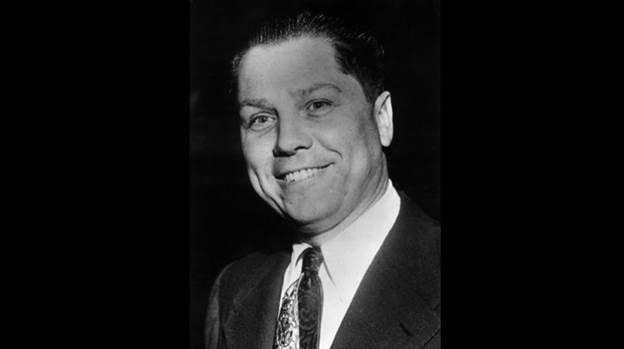
America’s Great Mystery: The 1975 Disappearance of Jimmy Hoffa
In 1957, Hoffa became president of the Teamsters Union at the Miami Beach, Florida convention. His predecessor was federally indicted, convicted and sentenced on fraud charges. One of Hoffa’s biggest achievements was bringing road truck drivers in North America under a single agreement called the National Master Freight in 1964. Hoffa also tried to bring in other transport employees into the union with limited success.
Hoffa would be re-elected to a third five-year term without any opposition despite being federally convicted of jury tampering and mail fraud.

In 1960, John F. Kennedy won a tight presidential election against Richard Nixon and would later appoint his brother Robert Kennedy as Attorney General. Robert Kennedy wanted to convict Hoffa for his corruption and ties to organized crime. Allegedly, the Attorney General had a “Get Hoffa” squad of prosecutors and investigators.
In 1964, Hoffa was convicted of tapering with a federal jury in Tennessee and sentenced to eight years in prison. Hoffa was later convicted in a second trial in Chicago for improper use of the Teamster’s pension fund and was sentenced to five years in federal prison.
Hoffa spent three years unsuccessfully appealing his two convictions all the way to the United States Supreme Court. In 1967, he started serving his thirteen-year sentence at the Lewisburg Federal Penitentiary in Pennsylvania.
Hoffa planned on running the union from prison and had a Detroit loyalist that he knew for years as acting president named Frank Fitzsimmons. Hoffa would later resign as the Teamster’s president over how Fitzsimmons was running the organization. In July 1971, Fitzsimmons was elected president of the union.
In 1971, less than five years completed in his sentence, Hoffa had his thirteen-year sentence commuted to time served by President Nixon. In exchange for this commutation, the IBT endorsed Nixon in the 1972 presidential election. The Teamsters traditionally had endorsed Democratic nominees in past presidential elections.
After Hoffa was released from prison, he received $1.75 million lump sum termination benefit by the Teamsters Retirement and Family Protection Plan. Nixon’s commutation did not allow for Hoffa to engage in the direct or indirect management of any labor organization until March 1980.
Hoffa had ambition to return to power sooner and sued the Nixon administration for this clause in the commutation. He lost his legal battle after the court ruled that Nixon was within his presidential powers to impose this restriction based on Hoffa’s prior misconduct as Teamsters’ president. Even with this set back, Hoffa returned to Local 299 in Detroit where he started with the Teamsters to drum up support for his comeback in the union.
In 1975, Hoffa was also working on his autobiography that was later published after his disappearance.
Jimmy Hoffa disappeared on July 30, 1975 and still to this today his death remains unsolved. A certain timeline was established by federal investigators the day of his apparent kidnapping and murder.
Hoffa had been met with opposition to another term as president of the Teamsters union by Anthony Provenzano, aka Tony Pro alleged capo of the Genovese crime family in New Jersey. Tony Pro was a one-time friend of Hoffa who had bitter feud with Hoffa in federal prison in the sixties. Pro had been a local chapter president with IBT in New Jersey and later national vice-president during Hoffa’s second term. In the mid-seventies, Pro refused to support Hoffa for another term as president of the Teamsters union and threated to kill him and his family if he ran again.
Hoffa also had dealings with other mafia figures from Detroit including the Giacalone brothers who were believed to have been negotiating between Hoffa and Pro trying to set up a truce between both men. Other observers in the Hoffa family saw it as a pretext for a silent hit against Hoffa.
According to reports, Hoffa was supposed to meet with Anthony Giacalone and Tony Pro at the Machis Red Fox restaurant in Bloomfield Township near Detroit at 2pm on July 30th. Around 2:30 p.m., Hoffa called his wife from a payphone directly behind the Machis Red Fox restaurant complaining that he was stood up by these guys.
Hoffa told his wife he would be home by 4 p.m. to grill steaks for dinner. Witnesses saw Hoffa pacing by his car who later called another associate complaining about Pro and Giacalone. The last time Hoffa was seen alive was around 3 p.m. by a witness who saw Hoffa in the back of a maroon vehicle possibly a Lincoln or Mercury with three other people.
The next morning Hoffa had not returned home and his wife called their children to let them know. An associate of Hoffa found his vehicle unlocked in the parking lot of the Machus Red Fox restaurant with no sign of him. The authorities were notified of his disappearance and the family later filed a missing person report including a $200,000 reward for any information about his whereabouts.
Earlier that day, Charles O’Brien who was Hoffa’s foster son had borrowed a maroon 1975 Mercury Marquis Brougham from Anthony Giacalone’s son named Joseph allegedly to deliver fish. O’Brien and Hoffa had a poor relationship for years and later a police K-9 in August identified Hoffa’s scent in that maroon Mercury.
When Pro and Giacalone were interviewed by authorities, they denied having a scheduled meeting with Hoffa at the Machus Red Fox restaurant on July 30th at 2 p.m. Both individuals had alibis that verified their timeline for that day.
After years of investigating by different law enforcement agencies, there is still no definitive conclusion on the circumstances of Hoffa’s disappearance that day. On December 09, 1982, Jimmy Hoffa was declared legally dead and his wife had died a few years earlier.
In 2001, the FBI matched DNA from Hoffa’s hair taken from his brush with a strand of hair found in Joseph Giacalone’s Mercury. This be would be another piece of evidence linking Hoffa to the vehicle.
Authorities and others believe organized crime was behind Hoffa’s disappearance and murder since his efforts to regain power in the Teamsters union posed a threat to their control of the organization and the union’s pension fund.
Law enforcement, journalists, professors and many others have so many theories of what happened to Jimmy Hoffa and how his body was disposed of. It is truly one of the most famous unsolved cases of our time.
It appears Hoffa entered the maroon Mercury on his own free will recognizing the individuals inside. His foster son had borrowed the vehicle in question to be used to “deliver fish” which belonged to Joseph Giacalone whose family was allegedly involved with the Detroit crime family.
With criminal investigations, you look at the common denominators and who had the most to gain with Hoffa’s death. Many in organized crime did not want Hoffa running for another term as Teamsters union president. The vehicle that Hoffa was last seen inside had ties to those with Mafia connections and was being allegedly used by his foster son that day. Evidence has shown that he was inside that vehicle through DNA and a positive K-9 alert on Hoffa’s scent. The question is what they did with his body. It appears no blood was found inside the vehicle and most likely Hoffa was killed outside the car.
After Hoffa was executed, his body most likely was disposed in the surrounding area where he was killed unlikely driven across state lines which would have been extremely risky. During the seventies and eighties, the mafia disposed of their victims in numerous ways including using large steel drums to put their victims inside and drop in large bodies of water. A perfect example was Johnny Roselli, aka Hollywood Johnny who was killed in 1976 and his body was found in a Miami bay inside a 55- gallon steel drum by fishermen. Roselli was a mobster with the Chicago Outfit and spent years in Los Angeles and Las Vegas working illegal rackets and schemes. Recently numerous decomposed bodies have been found in Lake Mead near Las Vegas due to the receding water levels. One body had gun-shot wound to the head inside a corroding barrel. Many believe the work of organized crime. It is possible that Hoffa suffered the same fate and is sitting at the bottom of a large body of water in the greater Detroit area.
His mysterious disappearance and death will be written and discussed for generations to come. Hoffa was a controversial and fascinating figure that rose to lead one of the most powerful unions in the United States and then one day on July 30th, 1975 disappeared without a trace. In conclusion, we may never know who really killed Jimmy Hoffa.