
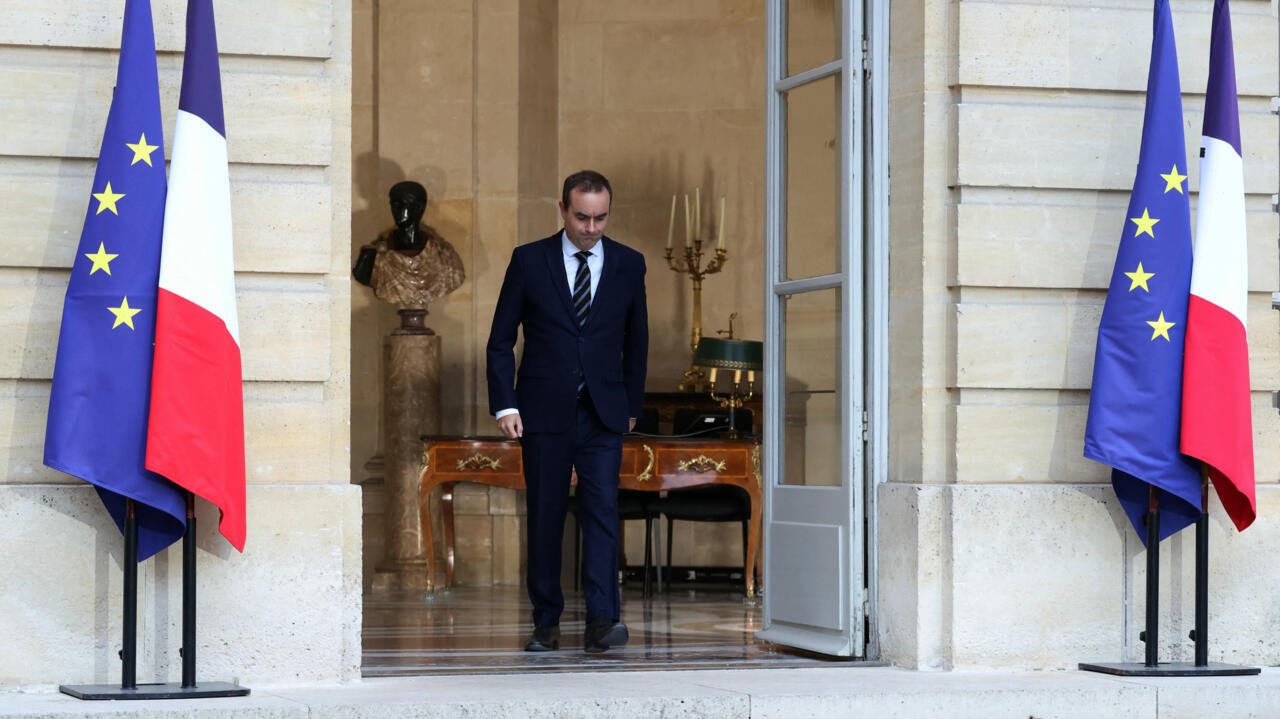
France in Crisis: The Prime Minister Sébastien Lecornu resigns Hours after appointing Cabinet
On 6 October 2025, France was rocked when Prime Minister Sébastien Lecornu only a few hours had to step down following his introduction of his cabinet. His regime was under one day long and this was one of the shortest in the modern French history. This abrupt departure has placed the nation in greater political and economic apprehension.
This article will discuss the history of the crisis, his resignation, the political reaction, market reaction, and the decisions available to President Emmanuel Macron.
The Background: A Split Parliament
Snap Elections and Hung Parliament
On June 2024, President Macron referred to snap elections in order to strengthen his government. The elections instead of giving control that was needed resulted in a hung parliament. No party or coalition had secured enough seats to create majority.
This has seen France being governed by weak governments that keep collapsing one another. This has been a constant change thus making it hard to pass laws or budgets.
Several Prime Ministers within Two Years
- Michel Barnier attempted to establish a government in the 2024 elections. He was unable to get support and resigned.
- Then followed Francois Bayrou, who too failed following his budget plan that was rejected.
- Macron nominated the new Prime Minister, Sebastian Lecornu on September 9, 2025. He was the fifth prime minister of Macron within two years.
Lecornu was supposed to steadify things. Rather, his administration took down in hours.
What is the Reason Sébastien Lecornu Resigned?
Cabinet Criticism
Lecornu attracted criticism on both the right and the left when he announced his new cabinet. The ministers were similar in many cases to the former government. Critics claimed that it was a re-cycled cabinet and did not have new ideas.
No Parliamentary Majority

The parliament of France is divided into four large camps:
- Macron’s centrist bloc
- The F-right National Rally of Marine Le Pen.
- France Unbowed is a far-left film by Jean-Luc Melenchon.
- The orthodox Republicans and Socialists.
Lecornu had to have the backing of at least one camp. but not one of them was willing to support him. He explained:
“I was ready to compromise, but each political party wanted the other to adopt its entire program.”
This stalemate rendered the process of governance difficult.
Budgets and Economic Pressure
France encounters massive debt to people, and tightness of EU regulations regarding expenditure. Lecornu proposed the taxation of the rich who had annual income of over EUR250,000. This was not popular with the left or the right.
He also vowed that he would not invoke Article 49.3 of the constitution that allows the government to enact a budget in non-voting mode. This was to be a sign of respecting democracy yet he was left with no option of driving laws through the parliament.
Lacking support and not having any legal loophole, Lecornu could only resign.
Political Reactions
The resignation triggered both outrage and possibilities on both ends of the political aisle.
- Marine Le Pen (far-right):She referred to the cabinet as pathetic, and demanded fresh elections.
- Jean-Luc Melenchon (far-left): Said that not just Lecornu, but also President Macron, had to resign.
- Olivier Faure (Socialists):He announced that his party would not vote in favor of the continuation of the government of Lecornu.
- Francois-Xavier Bellamy (Republicans): Said his party had nothing to worry about new elections, which means being ready to change things.
The message was simple, no significant party was ready to back the decision of Macron.
Market Reactions
It was not only a political but also an economic shock as the resignation. Within a short period of time, investors lost their trust:
- The stock index of CAC 40 fell by over 2%.
- Stocks of large banks such as BNP Paribas and Societe Generale had reduced by 4 percent and 5 percent respectively.
- The euro lost strength, and it was down by approximately 0.7 per cent against the US dollar.
All these figures indicate that political instability is having direct implications on the financial stability of France.
What Are Macron’s Options Now?
President Macron has a tough choice to make. He has three main options:
Appoint a New Prime Minister
He had an option of selecting a different candidate and re-try. However, parliament is so divided that a new leader is hardly likely to have more support than Lecornu.
Dissolve House of Commons and Recall Elections
Macron might dissolve Assemblee Nationale and conduct snap elections. This is what is being demanded by many opposition parties. However, it is not certain that new elections would overcome the standoff. Quite the contrary, they might make it worse.
Govern With a Minority
Macron may attempt to operate a minority government, bill by bill. This would be sluggish and unsteady particularly given the 2026 budget deadline in mind.
Both alternatives are risky. The fact is that Macron needs to make a decision swiftly when the crisis becomes more profound.
Why This Crisis Matters?
It is not merely a political play within France. It has wider consequences:
- To the people of France:Government instability influences employment, social initiatives, and economic self-confidence.
- In the case of Europe:France is the second largest economy in the EU. The inferior political strength of Paris undermines the whole European Union.
- To markets:Investors worry that France cannot manage its debt and make reforms that might impact on the euro and EU financial stability.
Conclusion
The resignation of Sébastien Lecornuhas only weakened France further in terms of political and economic uncertainty. His tenure in office, which cut across his government that had served a few hours in presenting his cabinet, illustrates that French politics was highly divided.
It is the hardest test that President Macron has faced so far. He has few choices with no majority in the parliament, and people becoming fed up with him. Whether he changes his prime minister, anew elections or attempts to govern in minority, the road further will be very challenging.
This much is evident, the political crisis of France is not yet ended.
FAQs
Q: Who is Sébastien Lecornu?
A: He is a loyalist of President Macron. He was a defense minister before assuming the position of the Prime Minister. He resigned because of his inability to support his new cabinet.
Q: What was the length of Lecornu Prime Minister?
A: He had not served a month, but his administration failed within 14 hours of his appointment of the cabinet.
Q: Why did he resign so quickly?
A: The reason behind this was that no political party was willing to stand in his favour and his cabinet was criticized more than ever. He was unable to rule without support.
Q: What is the implication of this on President Macron?
A: Macron is being pressured to death. He might need to make early elections or reach some other compromise. He is now extremely weak in his governance.
Q: How did markets react?
A: The French stock market dropped, banks were deprived of value and the euro was weakened. Shareholders are concerned with the stability of France.